
 Tiếng Việt
 한국어
 日本語
Article· Updated November 22, 2026
Business Storage In Ho Chi Minh City: Types, Containers And Costs 2027
On this page
Businesses in Ho Chi Minh City have several ways to store goods without building their own warehouse: renting a self-storage unit or shared racks indoors, renting a shipping container on a yard, or leasing warehouse space by the square metre. Each suits a different kind of goods, volume and access pattern. This guide compares them with concrete figures for volume, capacity and unit prices, so you can choose the right type of storage before you optimise costs for 2027.
Choose storage by three questions: how many cubic metres your goods take, how often you need to take them out, and whether they are sensitive to heat and humidity. If the volume fits a self-storage unit (MyStorage units run from 1 to 23 m³; 1 m³ holds about 8 to 10 medium cartons and has a reference price of 873,000 – 965,000 VND (about US$34–37) per month on the flexible plan, excluding VAT), indoor storage is usually more compact and secure. For bulky goods that tolerate the outdoors and need a truck or crane on site, a shipping container (a 20 ft container has about 33 m³ inside) or an open yard usually fits better. Storage pods and portable storage delivered to your door are still uncommon in Vietnam; this guide covers the closest alternatives. You can check the exact price for your size with the Check Price tool. A breakdown of each charge is in storage rental costs in Ho Chi Minh City by district.
When choosing a storage provider, trust matters as much as price. The short clip below shows how MyStorage builds trust with its customers (in English, with Vietnamese subtitles).
Choose Your Business Storage Type With Three Questions
Before comparing prices, answer three questions. They decide the type of storage more than the price does: The three questions are how often your goods move in and out each week, whether they need stable temperature or humidity, and who will handle loading. Answer those and most of the unsuitable options drop out before you ask anyone for a quote.
- How many cubic metres do your goods take?: Measure by volume rather than floor area, because goods can be stacked. Under 23 m³ fits within a self-storage unit; from about 33 m³ you are at the scale of a 20 ft container or a warehouse.
- How often do you take goods out?: Daily or weekly access calls for self-storage with flexible access hours; goods you rarely touch can go on shared racks to cut costs.
- Are the goods sensitive to heat, humidity or dust?: Cosmetics, supplements, electronics and documents need stable temperature and humidity; building materials and heavy equipment usually tolerate the outdoors.
The table below pairs each answer with the storage type to consider first:
| Situation | Consider | Why |
|---|---|---|
| Under 23 m³, boxed goods, frequent access | Indoor self-storage | Private lock, access on your schedule, you pay only for the volume you use |
| Small volume, rarely accessed | Shared racks | The operator receives and stores the goods; cheaper than self-storage of the same size |
| Goods sensitive to temperature or humidity | Air-conditioned unit | Stable environment; costs about 30% to 40% more for self-storage |
| Records and paperwork | Document storage | Controlled access, organised by retention period |
| Over 23 m³, outdoor-tolerant, truck or crane needed on site | Container or open yard | Large volume, placed close to where the goods are used |
| High-volume pallet goods, frequent dispatch | Warehouse space or a 3PL service | Truck access, pallet racking and handling processes |
Signs it is time to rent your own storage: cartons, POSM and documents block walkways in the office or shop; seasonal stock (Tết, promotions, product launches) needs extra space for a few months; or you are paying city-centre rent just to store goods. Small businesses and startups can read our guide to storage for small businesses and startups.
Business Storage Types and Models Compared
The table compares the eight models businesses usually consider, from indoor units to containers and pods. Capacity is a typical figure to give you a sense of scale, not a specification for every provider. The table below matches each answer to a storage type, from a self-storage unit for goods that move weekly, to shared racking for palletised stock, to a warehouse unit once you pass a few hundred square metres.
| Model | How it is rented | Typical capacity | Best for | Limits |
|---|---|---|---|---|
| Self-storage (private unit) | By unit, charged per m³ | 1 to 23 m³ at MyStorage | Boxed goods, samples, small stock | Limited unit size |
| Shared racks | By package, rack or m³; the operator receives goods for you | A few cartons to a few m³ | Goods you rarely need | No private unit |
| Air-conditioned unit | As self-storage, with temperature control | As self-storage | Cosmetics, supplements, electronics, documents | Higher price |
| Document storage | By volume of records | By box or records rack | Accounting records, contracts | Paperwork only |
| Container (shipping container storage) | By container, plus transport and crane | 20 ft about 33 m³; 40 ft about 67 m³ | Materials, equipment, outdoor-tolerant goods | Not insulated; needs a site and a crane |
| Pod / portable storage | Delivered to you, you load it, the provider moves it or leaves it | Depends on the provider | Moves, office relocations, temporary storage | Uncommon in Vietnam |
| Warehouse space or open yard (IOS) | By m², long-term lease | From tens of square metres | Distribution, manufacturing, machinery, vehicles | Needs more scale and operating capital |
| Smart locker | By the hour | One locker | Suitcases, small personal items | Not for business stock |
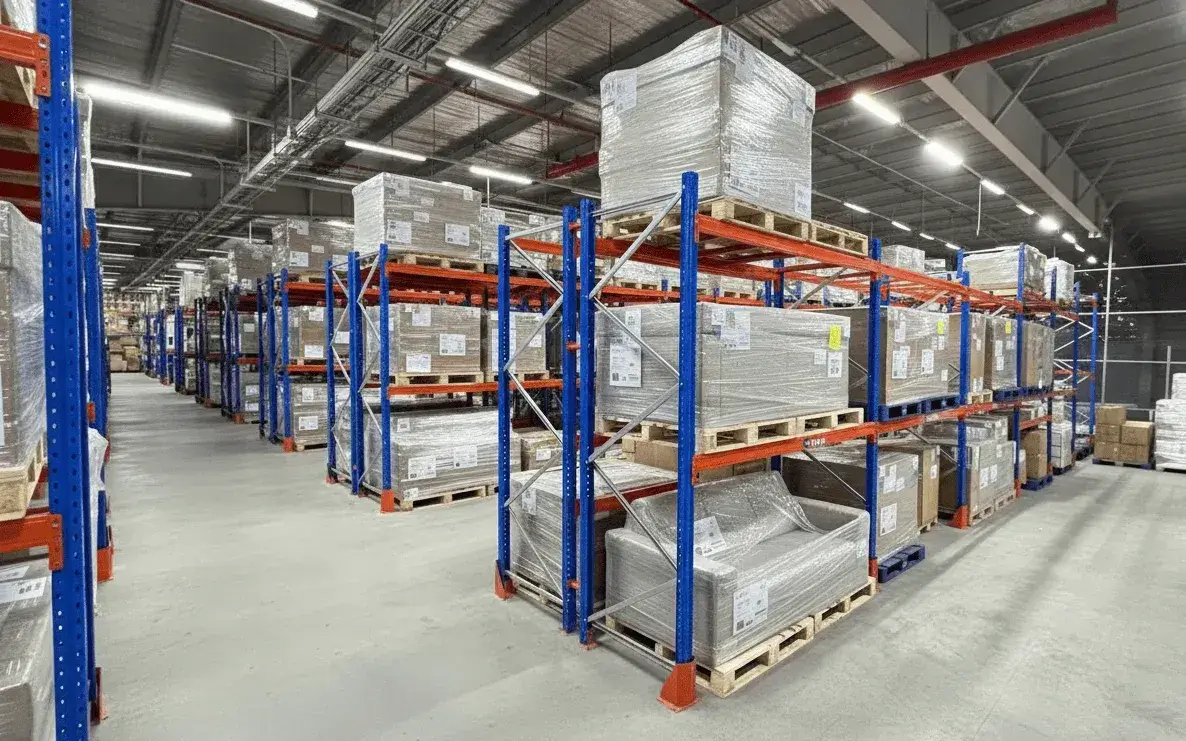
What separates the rows in the table is who runs the space and who carries the risk on the goods, not just the floor area, which is how rental warehouse types are classified. Goods that do not mind sun or rain, such as empty containers, vehicles and building materials, usually sit in Industrial Outdoor Storage (IOS) yards, where the charge follows the yard area rather than cubic metres. Temperature-sensitive stock has to go into cold and climate-controlled storage, which carries a running power cost, so it is worth using only for the part of the stock that needs it. Accounting records come with their own statutory retention periods by document type, so accounting record retention requirements are easier to meet when those files are kept apart from the trading stock.
Container Storage For Businesses: When Does It Make Sense?
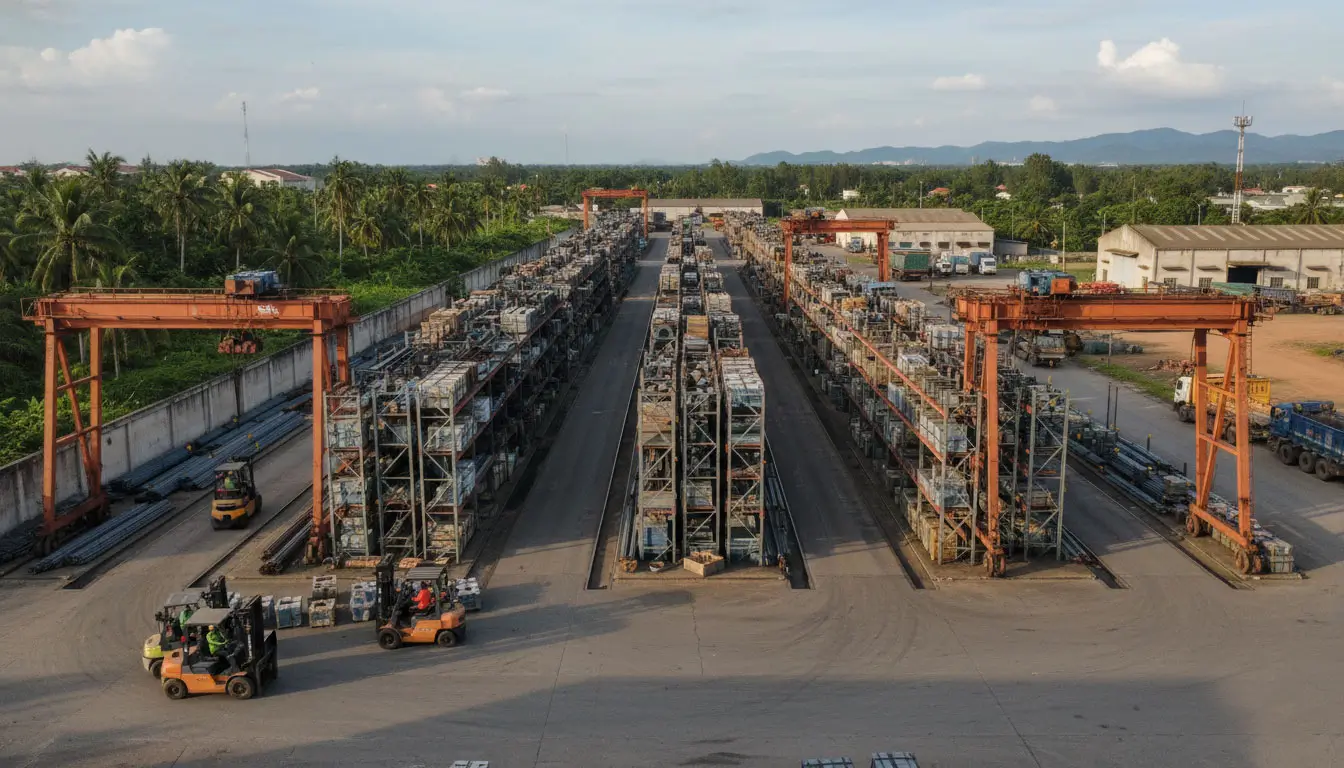
Container storage means using a used shipping container as a storage unit, placed at a provider’s yard or on the customer’s site. This means using a dry shipping container as a store, either on the provider’s yard or on your own site. A 20 ft container holds about 33 m³ and 10 standard pallets, so it suits bulky goods that sit still rather than stock you pick from daily.
What Is Container Storage?
Container storage (also called shipping container storage) means using a sea freight container, usually 20 ft or 40 ft, as a storage space placed at a fixed site. The business rents or buys the container; the provider brings it by tractor truck or crane truck and sets it down on a prepared base. Three types are common: dry containers for ordinary goods, high-cube containers that add about 30 cm of height, and refrigerated (reefer) containers that have a cooling unit but need a constant power supply.
Standard Container Sizes and Capacity
The table lists the standard container sizes with their internal dimensions, volume and how many pallets each one holds. A 20 ft container has an internal space of roughly 5.9 m × 2.35 m × 2.39 m, about 33 m³ and 10 pallets; a 40 ft container doubles the length, about 67 m³ and 20 pallets. Compare those figures against the total volume you estimated.
| Type | Internal size (L × W × H) | Volume | Pallets of 1.2 × 1.0 m, one layer | Compared with MyStorage’s largest unit (23 m³) |
|---|---|---|---|---|
| 20 ft | 5.90 × 2.35 × 2.39 m | About 33 m³ | About 10 pallets | About 1.4 times larger |
| 40 ft | 12.03 × 2.35 × 2.39 m | About 67 m³ | About 20 pallets | About 2.9 times larger |
| 40 ft high cube | 12.03 × 2.35 × 2.69 m | About 76 m³ | About 20 pallets, can be stacked higher | About 3.3 times larger |
Actual dimensions vary slightly by manufacturer and container age; measure the real interior and door opening before planning how to load.
Practical Advantages and Limits of Container Storage
Container storage has practical advantages, from large capacity and low cost per cubic metre, along with a few limits to weigh up. A container gives a good price per cubic metre when you rent the whole box and can sit on your own site, but the steel shell absorbs heat, so the inside can run hotter than the yard at midday, and access depends on the yard’s opening hours.
Advantages:
- Placed near where goods are used: a container can sit at your factory, site or yard, so you load and unload on the spot.
- Tolerates the outdoors: a steel shell suits materials, equipment and goods that are not sensitive to heat and humidity.
- Large volume in one unit: 33 m³ or more, beyond the largest self-storage unit.
Limits:
- Not insulated: the steel shell heats up in the sun, and day-to-night temperature swings make moisture condense inside; in Ho Chi Minh City’s rainy season, paper, wood, fabric and electronics can go mouldy without ventilation or dehumidifying.
- Needs a site and equipment: you need a level base, access for a tractor or crane truck and the landowner’s agreement; ask the yard owner and the local authority about construction and fire-safety rules at the location.
- Security depends on the yard: a container lock does not replace guards, cameras and access control for the whole site.
- You pay for the whole container: if you only use 8 m³ of a 20 ft container, you still rent 33 m³.
What to Ask When Getting a Container Storage Quote
When you ask for a quote, clarify the rent or purchase price, who pays for transport and crane lifts, and what the contract includes. Four costs commonly surface late: transport and crane handling both ways, yard fees if the box stays with the provider, after-hours access terms, and the condition of the shell including door seals and the timber floor.
- Rent or purchase price: monthly or one-off.
- Transport and crane: on delivery and on return.
- Site preparation: base, access, permits if any.
- Lock, guarding and insurance: who is responsible for loss or damage.
- Term and return conditions: minimum term, renewal, condition of the container (watertight, rust, holes).
MyStorage does not publish container prices; they depend on the provider, the location and the transport distance, so ask for a quotation that itemises each charge.
Container or Self-Storage?
A simple rule: if your goods are under about 23 m³ and need a closed, dry space with a private lock, an indoor self-storage unit is usually more compact, because you rent only the volume you need and do not deal with the site, a crane or yard security. For example, 10 pallets 1.2 m high take about 14 m³ and fit one large unit, while the same goods would fill less than half of a 20 ft container. In the other direction, from about 30 m³, or when the goods are materials and machinery that tolerate the outdoors, a container or open yard starts to make sense. MyStorage’s service is indoor units, not containers or pods; if your goods are large outdoor items, read open IOS storage yards to understand providers and pricing.
Storage Pods and Portable Storage: Do They Suit a Business?
Storage pods and portable storage are mobile containers delivered to your door, where you load them yourself before the provider takes them to its store. These are mobile storage boxes delivered to your door for you to load, then taken back to the provider’s warehouse. The model is common in the US and Australia; in Vietnam the equivalents work differently.
What Are Storage Pods and Portable Storage?
A storage pod, or portable storage unit, is a mobile container that the provider delivers to your home or premises. You load it at your own pace, then it is either taken to the provider’s facility or left where it is. The model is common in the United States and Australia for moving, renovating and temporary storage. In Vietnam, pod delivery to your door is still uncommon, so you will usually choose one of the closest alternatives below.
Four Closest Storage Alternatives to Portable Storage in Ho Chi Minh City
The table compares the four closest alternatives on who loads and unloads, where the goods sit and what to ask about each. The four options are a container placed on your site, a self-storage unit with transport included, a full-service storage provider, and a truck hired with labour per trip. They differ in who loads the goods and where the goods sit afterwards.
| Option | Who loads and unloads | Where the goods sit | Best for | Ask about |
|---|---|---|---|---|
| Container placed at your own site | You load on the spot | At your premises | Construction sites, factories, yards | Site, crane, humidity |
| Self-storage with transport | You, or a handling crew quoted separately | Private unit indoors | Goods that need a closed, dry, lockable space | Transport and handling fees, number of pick-ups |
| Shared racks | The operator receives and stores for you | Racks in a shared area | Goods you rarely need | Retrieval process, notice time |
| Moving or office relocation with storage | The provider’s crew | The provider’s warehouse | Home or office moves | Storage terms, liability for damage |
MyStorage supports transport, loading and unloading, import and export handling and supplies cartons on request; these are charged separately from the storage rent. If the business wants to outsource packing and delivery as well, read about the 3PL storage (third-party logistics) model.
A simple rule: if you want to load at your own pace on site and the goods tolerate the outdoors, lean towards a container; if you want the goods indoors, locked and secure, with access at any hour, lean towards a self-storage unit with transport.
Choosing Business Storage By Product Category
The table below shows at a glance which type of storage suits each industry; the details underneath give the suggested setup and the points to watch for each one. Each industry has one constraint that decides the storage type: fashion needs protection from damp, cosmetics and supplements need stable temperature, electronics need dust and static control, and e-commerce stock needs access several times a week.
Key: ● Best fit · ○ Possible · — Usually not suitable
| Industry | Self-storage | Air-conditioned | Shared racks | Document storage | Container / yard | Warehouse / 3PL |
|---|---|---|---|---|---|---|
| 🛒 Online shops and e-commerce | ● | ○ | ○ | — | — | ○ |
| 🏗️ Contractors and construction | ○ | — | — | — | ● | ○ |
| 🎪 Agencies, events and POSM | ● | — | ○ | — | — | — |
| 🚚 Distributors and pallet goods | ○ | — | — | — | — | ● |
| 🗂️ Offices and records | ○ | ○ | — | ● | — | — |
| 🧴 Temperature- and humidity-sensitive goods | — | ● | ○ | — | — | ○ |
Suggested Storage Setup and Points to Watch by Industry
The table sets out a suggested setup for each industry, with the points to watch for in each one. The table pairs each industry with a suggested setup and the point to check, for example air-conditioned units with humidity control for fashion, or floor loading and forklift access for equipment.
| Industry | Suggested setup | Points to watch |
|---|---|---|
| Online shops and e-commerce | Self-storage of 3 to 10 m³ (30 cartons take about 3 to 4 m³, 100 cartons about 10 to 12 m³); cosmetics and supplements in an air-conditioned unit. | The 375 Võ Nguyên Giáp site has a workspace for startups and online sellers: sit, work and pack orders on the spot, instead of carrying goods home and out again to the carrier. |
| Contractors and construction | A container or yard for materials and heavy tools; a small lockable unit (1 to 3 m³) for power tools, measuring instruments and site records. | A truck or crane must reach the site; keep heat- and humidity-sensitive items out of the container. |
| Agencies, events and POSM | A 5 to 10 m³ unit in a convenient location, on a monthly plan to flex with the event calendar. | Switch to the 12-month plan only when the volume is steady all year. |
| Distributors and pallet goods | From about 16 pallets (over 23 m³): warehouse space charged by the m² or a 3PL service. | Include truck access, pallet racking and handling labour; MyStorage’s largest unit is 23 m³. |
| Offices and records | Document storage with controlled access. | Organise by retention period so records can be destroyed on time; read how long accounting records must be kept before sizing your storage. |
| Temperature- and humidity-sensitive goods | An air-conditioned unit, especially when the goods are valuable; for small samples or staff belongings, a personal mini storage unit is a budget option. | If you need a specific temperature range, see cold and climate-controlled storage. |
Estimating Volume: From Cartons and Pallets to Containers
The basic formula: volume (m³) = length × width × height of the stack of goods. For medium cartons, 1 m³ holds about 8 to 10. A 1.2 × 1.0 m pallet stacked 1.2 m high takes about 1.44 m³. Leave room for an aisle so you can reach goods at the back; goods packed wall to wall are hard to get out.
| Goods | Approximate volume | Suggested unit | Note |
|---|---|---|---|
| 30 medium cartons | 3 to 3.8 m³ | 5 m³ (3 m³ if packed tightly and rarely accessed) | Leave a path to reach the cartons at the back |
| 60 medium cartons | 6 to 7.5 m³ | 7 m³ or 10 m³ | Choose 10 m³ if stock is still growing |
| 4 pallets 1.2 m high | About 5.8 m³ (4 × 1.44) | 7 m³ to 10 m³ | Pallets need extra room for an aisle |
| 10 pallets 1.2 m high | About 14.4 m³ | Over 10 m³: quotation for a large unit (MyStorage has units up to 23 m³) | Do not infer the price from the table; ask for a quotation |
| 20 pallets 1.2 m high | About 28.8 m³ | Beyond the largest 23 m³ unit: look at warehouse space or a 20 ft container | A 20 ft container has about 33 m³ inside |
A quick estimate in four steps:
- Group the goods by type and note the quantities.
- Measure the largest item (furniture, equipment, pallets) to be sure it fits through the unit door.
- Add up the volume and add room for an aisle.
- Choose the nearest unit size, with a margin if stock will grow during the year.
Counting by m³ and by m² can give very different results; read our comparison of renting by m³ and by m² to choose the method that suits your goods. Take photos of your goods and let MyStorage’s AI Size Estimator work it out:
Estimate your storage size with AI
Business Storage Reference Prices for 2027
Choose the rental type, size and temperature to see today’s MyStorage prices and book with current offers. Pricing follows the volume of the unit and the plan: a 1 m³ unit runs 873,000 to 965,000 VND a month on the flexible plan, and 742,000 to 820,000 VND on the 12-month plan. The larger the unit, the lower the rate per cubic metre.
Choose the rental type, size and temperature to see today’s MyStorage prices and book with current offers:
Below are 2027 reference prices for MyStorage’s indoor self-storage units, excluding VAT:
| Unit size | Standard, flexible plan (per month) | Standard, 12-month plan (per month) | Air-conditioned, flexible plan (per month) | Air-conditioned, 12-month plan (per month) | Unit cost per m³ (standard, flexible plan) |
|---|---|---|---|---|---|
| 1 m³ | 873,000 – 965,000 VND (about US$34–37) | 742,000 – 820,000 VND (about US$29–32) | 1,136,000 – 1,256,000 VND (about US$44–49) | 966,000 – 1,067,000 VND (about US$38–41) | 873,000 – 965,000 VND (about US$34–37) per m³ |
| 2 m³ | 1,185,000 – 1,309,000 VND (about US$46–51) | 1,007,000 – 1,113,000 VND (about US$39–43) | 1,630,000 – 1,802,000 VND (about US$63–70) | 1,386,000 – 1,532,000 VND (about US$54–60) | 593,000 – 655,000 VND (about US$23–25) per m³ |
| 3 m³ | 1,415,000 – 1,563,000 VND (about US$55–61) | 1,202,000 – 1,329,000 VND (about US$47–52) | 1,869,000 – 2,065,000 VND (about US$73–80) | 1,588,000 – 1,756,000 VND (about US$62–68) | 472,000 – 521,000 VND (about US$18–20) per m³ |
| 5 m³ | 1,796,000 – 1,984,000 VND (about US$70–77) | 1,526,000 – 1,687,000 VND (about US$59–66) | 2,524,000 – 2,790,000 VND (about US$98–108) | 2,146,000 – 2,371,000 VND (about US$83–92) | 359,000 – 397,000 VND (about US$14–15) per m³ |
| 7 m³ | 2,612,000 – 2,886,000 VND (about US$101–112) | 2,220,000 – 2,453,000 VND (about US$86–95) | 3,533,000 – 3,905,000 VND (about US$137–152) | 3,003,000 – 3,319,000 VND (about US$117–129) | 373,000 – 412,000 VND (about US$14–16) per m³ |
| 10 m³ or more | 3,533,000 – 3,905,000 VND (about US$137–152) | 3,003,000 – 3,319,000 VND (about US$117–129) | 4,853,000 – 5,363,000 VND (about US$189–208) | 4,125,000 – 4,559,000 VND (about US$160–177) | Quoted by actual size |
These are reference prices for 2027, billed in VND; the figures in brackets are approximate conversions, and exchange rates move. They apply to MyStorage’s indoor self-storage units, excluding VAT, and the 12-month plan is 15% cheaper than the flexible plan. The unit cost per m³ falls sharply from 1 m³ up to about 5 m³ and then levels off, and from 10 m³ upwards you need a quotation for the actual size rather than inferring it from the table. Shared racks cost about 8% to 23% less than self-storage of the same size, depending on size. Prices for containers, open yards and warehouse space charged per m² depend on each provider; for district-level rents, read storage rental costs in Ho Chi Minh City 2027.
How to Cut Storage Costs: Five Levers With Numbers
The figures below come from the 2027 reference prices above; check them with the Check Price tool before you decide. The five levers are renting the volume you actually need, committing to 12 months for roughly 15% off, using the height with racking, batching your transport runs, and paying for climate control only on the stock that needs it.
- Separate fast-moving from slow-moving stock: shared racks cost about 8% to 23% less than self-storage of the same size, so put goods you rarely touch on shared racks and keep daily-access goods in a self-storage unit.
- Choose the 12-month plan when demand is steady: the 12-month plan is 15% cheaper, equal to 12 × 0.85 = 10.2 months of the flexible price. If you are sure to use the unit for more than about 10 months a year, the 12-month plan wins; confirm the commitment and early-termination terms before signing.
- Use air-conditioning only where needed: for a 5 m³ unit, the air-conditioned version costs about 728,000 to 806,000 VND (about US$28–31) more per month on the flexible plan; put sensitive goods in a small air-conditioned unit and ordinary goods in a standard one.
- Rent the right size: going from 5 m³ to 7 m³ costs about 816,000 to 902,000 VND (about US$32–35) more per month while the unit cost per m³ barely falls further; upgrade only if you will really use the extra volume.
- Batch pick-ups and transport: the number of pick-ups included and any charge beyond the plan depend on the service and the agreement; transport and handling are charged separately. Batching orders reduces both.
Always compare the total monthly cost including rent, transport, handling and extra charges, not just the rental unit price.
Choose a Business Storage Location That Fits Your Delivery Routes
Location directly affects transport cost and delivery speed. As a rule, put the storage close to where most goods leave from, not necessarily close to the office. Judge a location by the time to your main customer clusters and to your courier’s drop-off point, not by the distance from your office. A unit 5 km further out but on your delivery route usually costs less in practice than a closer one against the flow.
- Mostly city deliveries: choose storage near main roads with easy access for small trucks.
- Shipping to other provinces or collecting from industrial parks: choose storage near the city gateways and expressways.
- Staff need daily access: choose storage with 24/7 access and a loading area.
MyStorage has sites at 375 Võ Nguyên Giáp (An Khánh, Thủ Đức City), 90 Song Hành (An Phú, Thủ Đức City) and a smart-locker point inside Ministop, 69 Trần Trọng Cung (District 7). Opening hours and directions for each site are listed on the MyStorage locations page, so you can choose the one closest to your delivery routes. For warehouse space and yards that need container trucks, businesses usually look to the outskirts and industrial parks: see storage in Binh Duong near VSIP 1 and storage in Hoc Mon, two guides that cover access for trucks and container trucks.
Storage and Workspace for Businesses at MyStorage
At 375 Võ Nguyên Giáp (An Khánh, Thủ Đức City), MyStorage offers air-conditioned self-storage with individual locks, multi-layer security, 24/7 access and a loading area. Beyond the units, the 375 Võ Nguyên Giáp site has a workspace where startups and online sellers keep stock and pack orders on site, so you are not hauling goods home every time an order comes in.
Store Stock and Work on Site at 375 Võ Nguyên Giáp
The site also has a workspace for startups and online sellers. Your team can sit and work there, take stock from the unit and pack orders on the spot, instead of carrying goods back to the office and out again to the carrier. In peak season, goods stay in cool storage, seasonal staff have a desk, and checking, labelling and handover to the carrier all happen in one place.
If you only need space for samples, documents or staff belongings, a personal mini storage unit is a budget option. For an overview of all services, see storage unit rentals in Ho Chi Minh City.
Checklist Before You Sign a Business Storage Contract
Whether you choose an indoor unit, a container or warehouse space, ask the checklist questions below before you sign. The checklist below covers what to confirm in writing: the actual volume or area, after-hours access, additional fees, the goods insurance policy, and the termination terms. Confirm each item in writing before signing, since a verbal answer about access hours or extra fees is the first thing to disappear when the invoice arrives.
Whether you choose an indoor unit, a container or warehouse space, ask the provider to answer these points in writing:
| Item | What to confirm |
|---|---|
| Price and payment | Is VAT included? What are the flexible and 12-month prices, the payment schedule, the deposit and the conditions for refunding it? |
| Term | Minimum term, how to renew and early-termination conditions. |
| Access and pick-ups | Access hours, the number of pick-ups included, charges beyond the plan and the notice required. |
| Security and storage conditions | Individual lock, cameras, access control, temperature and humidity. For a container: is the yard guarded, is the container watertight? |
| Permitted goods | The list of prohibited, dangerous and flammable goods. |
| Insurance and liability | Who is responsible for loss or damage, and the conditions for insuring the goods. |
| Transport and handling | A separate quotation for moving in and for taking goods out, based on the address, the volume and the access conditions. |
When stock rises and falls with the seasons, businesses usually rent a unit by the month and resize it rather than signing for a large warehouse, which is the idea behind flexible business storage in Ho Chi Minh City.
Frequently Asked Questions About Business Storage
What is container storage?
Container storage means using a sea freight container (usually 20 ft or 40 ft) as a storage space placed at a fixed site. A 20 ft container has about 33 m³ inside and a 40 ft about 67 m³. It suits goods that tolerate the outdoors; goods sensitive to temperature and humidity belong in indoor storage.
How is shipping container storage different from self-storage?
Shipping container storage is rented by the whole container (about 33 m³ or more), usually placed outdoors and needing a crane. Self-storage is an indoor unit rented by the m³ (MyStorage units run from 1 to 23 m³) with a private lock, the facility’s shared security and no site to prepare.
How many pallets and cubic metres does a 20 ft container hold?
About 10 pallets of 1.2 × 1.0 m in one layer and about 33 m³ of interior volume; in practice it depends on how you load it and on the aisle.
Do I need a permit to use a container as storage?
It depends on where it is placed. Ask the site owner and the local authority about construction and fire-safety rules before placing it; this is not legal advice.
Does a container protect against damp and mould?
The steel shell is not insulated, so it can heat up in the sun and moisture can condense when the temperature changes. Paper, wood, fabric and electronics can go mouldy in the rainy season without ventilation, a raised floor or a dehumidifier. Sensitive goods belong in an air-conditioned unit.
What are storage pods?
A storage pod is a mobile storage unit delivered to your premises for you to load, then taken to the provider’s facility or left on site. The model is common in the United States and Australia.
Is portable storage common in Vietnam?
Pod delivery to your door is still uncommon. The closest alternatives are a container placed at your own site, self-storage with transport and handling, shared racks, or moving services that include storage.
Does MyStorage rent containers or pods?
MyStorage’s service is indoor units (self-storage from 1 to 23 m³, shared racks, air-conditioned units, document storage and lockers), not containers or pods. MyStorage supports transport and handling on a separate quotation.
Should a small business choose self-storage or shared racks?
Self-storage suits businesses that take stock out often and want to organise it themselves. Shared racks cost less and suit small volumes that you rarely need to access.
How much does business storage cost in Ho Chi Minh City in 2027?
At MyStorage, a 1 m³ standard unit has a reference price of 873,000 – 965,000 VND (about US$34–37) per month and an air-conditioned unit 1,136,000 – 1,256,000 VND (about US$44–49) per month on the flexible plan, excluding VAT. The 12-month plan is 15% cheaper. Use the Check Price tool for the exact price for your size.
Is the 12-month plan worth it?
The 12-month plan is 15% cheaper, equal to 12 × 0.85 = 10.2 months of the flexible price. If you are sure to use the unit for more than about 10 months a year it wins; confirm the commitment terms before signing.
Can businesses access their storage outside office hours?
Yes. Self-storage at 375 Võ Nguyên Giáp allows tenants 24/7 access; MyStorage staff are on site during office hours.
Should business goods go into an air-conditioned unit?
Use an air-conditioned unit for cosmetics, supplements, electronics, documents and anything that spoils in heat and humidity. Ordinary items such as packaging and POSM can go into a standard unit to save money.
When do I need warehouse space instead of a self-storage unit?
When the goods exceed about 23 m³ (about 16 pallets 1.2 m high), need trucks at the door often, or need pallet racking and dispatch processes. Then compare warehouse space charged per m² or a 3PL service.
How do I estimate the storage volume my business needs?
Estimate in cubic metres: 1 m³ holds about 8 to 10 medium cartons, and a pallet 1.2 m high takes about 1.44 m³. You can also photograph your goods and let MyStorage’s AI Size Estimator estimate it for you.
Are transport and handling included in the rent?
Do not assume so. Request a separate quotation based on the address, the volume of goods, the vehicle and the access conditions, for both moving in and taking goods out.
Related articles
Article
Moving To HCMC: Where Your Shipment Goes Before You Have An Apartment 2027
Moving to Ho Chi Minh City before the lease is signed? This guide follows an international shipment from Cat Lai Port and Tan Son Nhat through customs clearance into storage-in-transit…
Read article

Article
Do Packing Cubes Really Make A Suitcase Tidier? How To Use Them And Store Luggage 2027
Packing cubes keep a suitcase tidy and easy to search, but only mechanical compression cubes actually reduce the volume of clothes; this guide compares three types of bag, how to pack them…
Read article
Article
Storing Children’s Toys, Strollers And Everyday Items: A Tidy Apartment 2027
To keep an apartment with a small child tidy, parents should rotate toys, hang the stroller upright behind a door and move bulky items from each stage of the baby’s life into family storage…
Read article
