
 Tiếng Việt
 한국어
 日本語
Article· Updated November 22, 2026
Is a warehouse classified as Industrial or Commercial Real Estate?
On this page
In the field of investment, leasing, and warehouse development, clearly distinguishing whether a warehouse is classified as industrial or commercial real estate is very important. Each type has different legal characteristics, construction standards, management mechanisms, and value exploitation: commercial real estate typically includes office buildings, shopping centers, retail spaces, etc., serving business operations and services for end customers; while industrial real estate is geared towards production, processing, assembly, and logistics, often requiring high technical infrastructure and proximity to industrial zones, ports, or major transport routes.
In practice, warehouse classified as industrial real estate because they directly serve the functions of storage, transshipment, and distribution of goods within the production and logistics chain.
However, depending on the purpose of use, scale, and location, warehouses may also exhibit characteristics of commercial real estate—especially mini-warehouses, self-storage facilities, and record storage in urban areas catering to flexible rental needs or services for small and medium-sized enterprises. Accurately identifying this nature helps businesses and investors choose the most suitable operational and exploitation strategies aligned with their needs and business goals. To see who owns and operates this asset class, see the listed warehousing, port and logistics companies.
Concept of Real Estate Types and Basic Characteristics
Commercial real estate is property used to generate income through leasing or business activity, which sets it apart from residential property. Commercial real estate earns from business and services on site, industrial real estate serves production and the movement of goods, and a warehouse sits on the border because it both holds goods and can sell a storage service.
Commercial Real Estate
Commercial real estate refers to properties used to generate profit through leasing, investment, or operating business activities. It includes types such as offices, shopping centers, retail spaces, hotels, and small warehouses serving distribution or storage of goods near central locations. Four defining characteristics:
- Prime locations, situated in central areas or densely populated regions, easily accessible.
- Emphasis on aesthetics, modern design, and amenities for tenants.
- Convenient transportation, close to major roads, parking lots, and public transport.
- Lease contracts are often long-term, providing stability for both investors and tenants.
- Typically includes professional management services, security, and building maintenance.
Industrial Real Estate
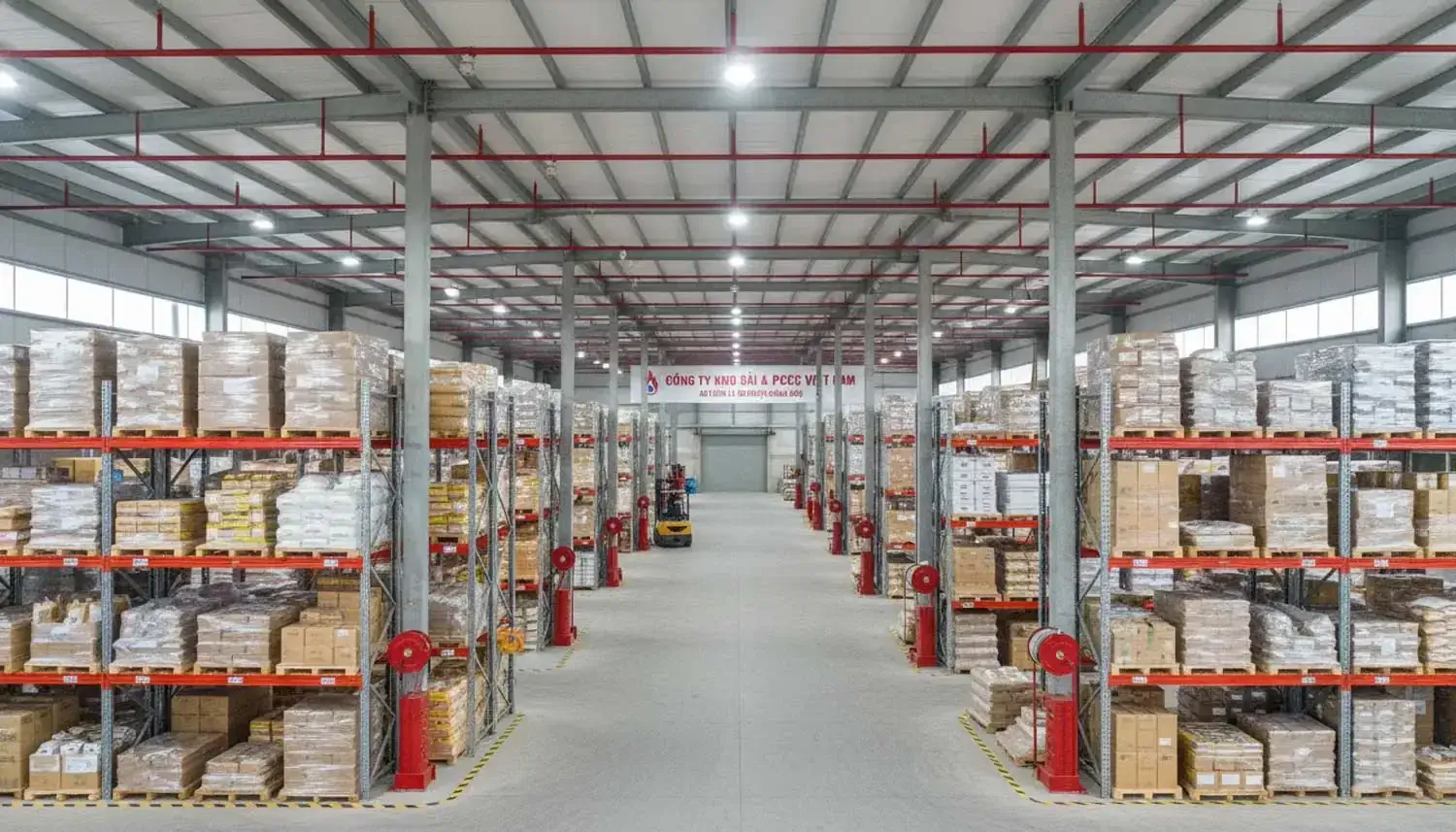
Industrial real estate is primarily used for production, storage, distribution of goods, or other industrial activities such as factories, large production workshops, and warehouses.. Four defining characteristics: This group is tied to industrial parks, clusters and transport corridors, so it is judged on floor load, clear height, container access and fire-protection infrastructure rather than on footfall as a retail unit would be.
- Large land and factory areas, high ceilings, and strong structural frameworks.
- Usually located near industrial zones, ports, ring roads, and key logistics routes.
- Prioritizes practicality, ease of expansion, and arrangements for large-scale production and transportation.
- Integrated technical infrastructure: fire protection systems, three-phase electricity, water supply, and truck/container parking.
- Flexible lease contracts, suitable for expansion needs or changes in production.
Warehouse, Storage Facility
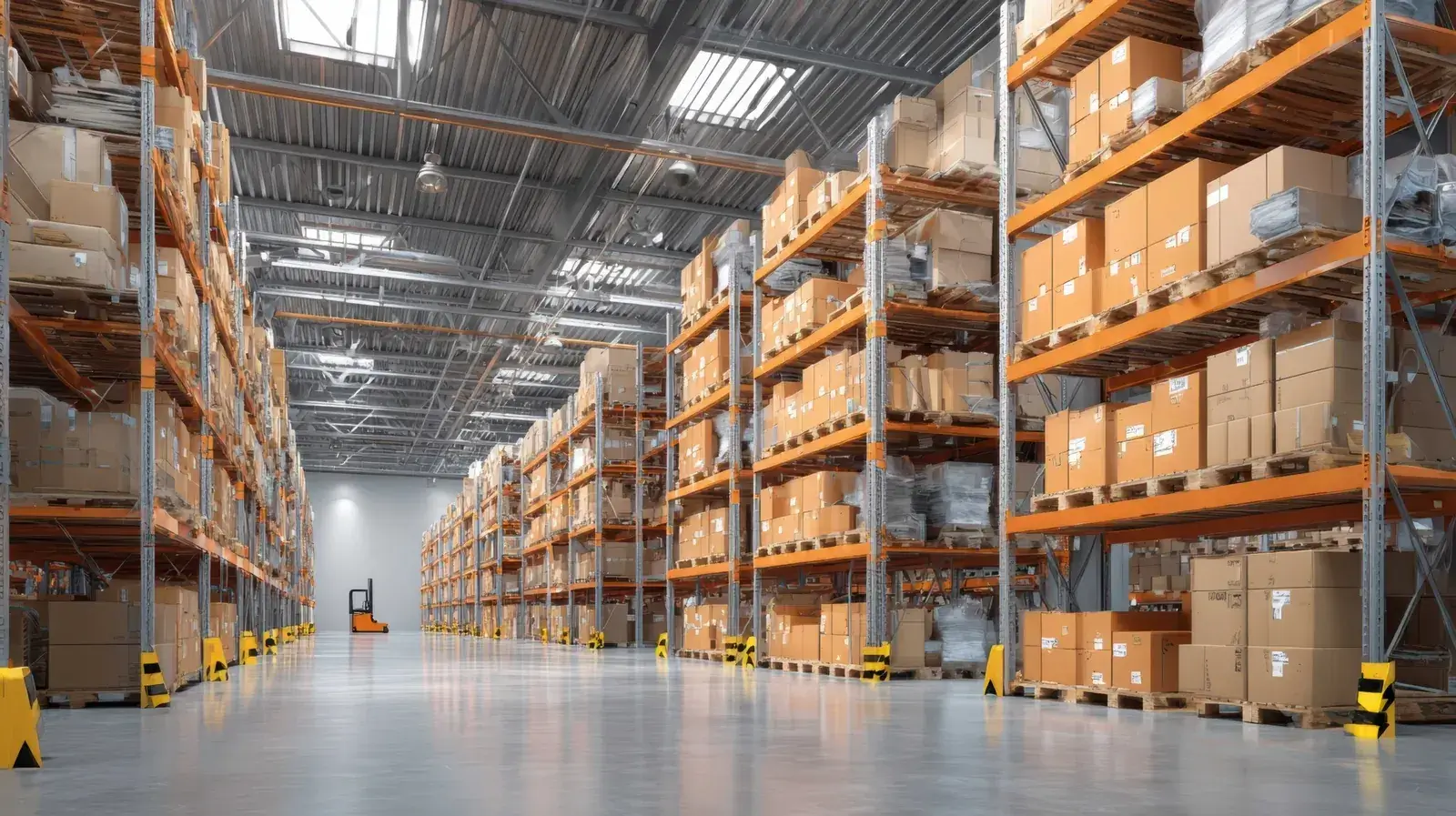
A warehouse is a type of real estate used for storing, preserving, and distributing goods, materials, or documents storage for businesses, individuals, or e-commerce warehouse. Warehouses can be independent or integrated into commercial or industrial projects. Four defining characteristics:
- Diverse Sizes: Ranging from mini warehouses (5–30 m²), medium warehouses (30–300 m²) to large warehouses (over 1,000 m²).
- Optimized Storage Design: High ceilings (typically 6–12m), load-bearing floors, and large entry and exit doors.
- Security Systems: Equipped with surveillance cameras and fire protection systems that meet standards.
- Flexible Locations: Can be found in industrial zones (industrial characteristic) or near city centers and major streets (commercial characteristic).
- Diverse Purposes: For storing goods, transshipment, cold storage, document storage, or e-commerce.
- Flexible Lease Agreements: Available for short-term or long-term, with professional management services or self-management.
Warehouses are a type of real estate that combines characteristics of both commercial and industrial sectors, serving both production-logistics needs and the demand for storage and distribution of goods for various customer groups.
Is a Warehouse Industrial or Commercial Real Estate?
A warehouse is a unique type of real estate located at the intersection of industrial and commercial sectors. However, in essence, most warehouses are still classified as industrial real estate for the following reasons:
- The primary function of a warehouse is to store, preserve, transship, and distribute goods—directly supporting production, logistics, and supply chain operations.
- Locations and designs typically prioritize proximity to industrial zones, ports, and major transport routes, featuring physical characteristics such as high ceilings, load-bearing floors, and spacious areas for truck/container access.
- Legal Aspects: Most large warehouse projects are built on industrial land or non-agricultural business land, subject to industry standards for construction, fire protection, and environmental regulations.
However, warehouses can also exhibit commercial elements in certain cases:
- Mini warehouses, self-storage facilities, and small record storage located in commercial buildings or urban areas serve flexible rental services, catering to individual customers or small businesses.
- Some warehouses integrate operational services and short-term rentals for e-commerce, retail, or urban logistics.
While warehouses are primarily regarded as industrial real estate, in practice, depending on the purpose of use, scale, and location, they can also exhibit characteristics of commercial real estate. Proper differentiation helps businesses and investors choose the most suitable strategies aligned with their needs and business goals.
The Role of Warehouses and Classification of Warehouses by Function
The Role Of Warehousing In The Supply Chain
A warehouse plays three main roles in the supply chain: a buffer between production and consumption when the two are out of step, a point for consolidating and splitting goods before distribution, and a place to protect goods so they keep their condition until delivery. Where cross-docking in the warehouse is used, goods barely rest at all and are sorted straight onto outbound routes, cutting delivery time and holding cost.
Warehouses are classified by function and intended use, from general storage to facilities holding manufactured goods.
Classifying Warehouses By Function
The table below sorts five groups of warehouse by function, user and typical floor area, from general storage of 500 to 5,000 m² down to document storage of only 5 to 30 m². Each group needs different infrastructure and is costed differently, so identifying your group before comparing prices is the cheapest step you can take.
| Warehouse Type | Function / Need | User Group | Common Size | Characteristics |
|---|---|---|---|---|
| General Storage Warehouse | Storing manufactured goods and finished products | Manufacturing and distribution companies | 500–5,000 m² (or larger) | Large area, high ceilings, load-bearing floors |
| Transshipment Warehouse | Consolidating, breaking down, and rapid distribution | Logistics companies, e-commerce | 200–2,000 m² | Location near central/logistics, continuous entry and exit |
| Cold Storage Warehouse | Preserving temperature-sensitive goods | Food, pharmaceuticals, cosmetics | 20–1,000 m² | Temperature control, refrigeration systems |
| Document Storage Warehouse | Storing papers, records, and documents | Offices, law firms, accounting firms | 5–30 m² | Small area, security, moisture resistance |
| Production Warehouse | Combining storage and supporting production lines | Factories, workshops | 1,000–10,000 m² | Integrated with production areas, convenient internal transport |
| Mini / Self-Storage Warehouse | Small, flexible storage | Individuals, online shops, startups | 5–30 m² | Small area, short/long-term rental options |
| Short-Term / Flexible Rental Warehouse | Meeting seasonal, event, or urgent needs | Businesses, event organizers | 10–200 m² | Flexible contracts, diverse sizes |
| E-commerce Warehouse | Storing, packaging, and rapid distribution | E-commerce platforms, online shops | 50–1,000 m² | Modern management, integrated software, urban proximity |
| Urban Distribution Warehouse | Optimizing last-mile deliveries, fast shipping | Delivery units, e-commerce | 30–300 m² | Near city centers, convenient for small vehicles, flexible deliveries |
In a modern supply chain most warehouse work is handed to a third party, and 3PL logistics sets out how far a provider takes over storage and delivery.
Many warehouses can integrate multiple functions or adapt flexibly according to actual needs. The user groups range from individuals and small businesses to large corporations.
Implications for Investment and Warehouse Leasing
Understanding and distinguishing between commercial and industrial real estate helps businesses and investors choose the right type of warehouse and location that aligns with their business objectives. For the same building, classing it as industrial means comparing rent per square metre over a long lease; classing it as commercial means comparing revenue per square metre and monthly occupancy, and the two views lead to different decisions.
What It Means When You Rent A Warehouse
For a tenant, classing a warehouse as industrial or commercial decides three things: the reference price, the lease terms and the paperwork you may use for business activity. An industrial warehouse inside an industrial park is cheaper per square metre but far from the city, while a commercially flavoured warehouse near the centre costs more and gives you shorter delivery times. When comparing costs, bring both to the same unit, because storage priced by m³ versus m² produces a different invoice for the same volume of goods.
Currently, warehouses are an attractive segment due to consistently high occupancy rates (often reported to be over 94–96% in major cities) and significantly lower construction or rental costs compared to office or retail spaces.
Before deciding to lease or invest, a business has to decide which group it belongs to: small-scale flexible storage, or storage serving production and a large supply chain, because the two use different types of warehouse and different cost models. Two directions:
- If only small, flexible storage with quick delivery is required: prioritize mini warehouses or urban commercial storage, which can be rented short-term at reasonable costs.
- If serving large-scale production, logistics, or supply chains: opt for large industrial warehouses with high ceilings, located near ports, industrial zones, or key logistics routes.
Accurately identifying these needs will help optimize costs, select the right products, and enhance operational efficiency and asset exploitation.
Although warehouses exist between the concepts of commercial and industrial real estate, primarily being viewed as industrial real estate, the clear distinction between these two characteristics plays a crucial role in optimizing location choices, investment costs, and operational efficiency.
What It Means For A Warehouse Investor
For an investor, the classification decides the legal framework of the land, the term of the land lease and the target tenants. An industrial warehouse aims at long-term tenants such as factories and logistics operators, with steady cash flow but little flexibility to change use; a commercially flavoured warehouse in the city lets space unit by unit on short terms, earning more per square metre but needing constant operation. The question of renting a ready-built warehouse or building your own puts the capital cost and the time to operation of both routes on the same scale.
Between the two groups sits one more asset class: self-storage let by the unit. It runs like commercial property in serving many small customers on short contracts close to residential areas, yet its infrastructure follows industrial standards with load-bearing floors, fire protection and forklift aisles, and personal mini storage rental is the most common form of this class in Ho Chi Minh City.
Businesses and investors should carefully consider characteristics, location, and usage objectives before deciding to lease or invest in a warehouse, ensuring that the warehouse solution aligns best with their development strategy and actual needs.
Whichever group a warehouse falls into, the result still comes down to how it is run inside: FIFO and FEFO decide which goods leave first, while the type of pallet used in the warehouse decides the stacking load and how much of the height you can use.
For a business just starting out, warehouse management in Excel is enough to track stock movements and know exactly how much space you really use before considering a long lease; and when comparing budgets unit by unit, mini storage prices by volume show that the price per cubic metre falls as the unit gets larger.
One last note on the goods themselves: whether the warehouse is classed as industrial or commercial does not change the fact that moisture-sensitive stock still needs a controlled environment, and the role of dehumidifiers in storage explains why humidity decides the condition of goods more than clear height does.
FAQ
A warehouse sits between commercial and industrial real estate categories, but fundamentally it is often classified as industrial real estate because it primarily supports production, storage, and distribution functions.
Commercial real estate focuses on business and service operations in central areas, while industrial real estate is geared toward production, logistics, and large-scale goods storage.
Mini warehouses, self-storage, or small document storage facilities in urban areas can have commercial real estate characteristics as they serve flexible rental needs for individuals and small businesses
Traditional warehouses with large space, high ceilings, and logistics-oriented design are typically classified as industrial real estate.
Accurate classification helps businesses choose the most suitable warehouse type, location, cost structure, and legal compliance for their logistics or commercial strategy.
Warehouses near urban centers or flexible storage services (like mini warehouses) tend to have more commercial characteristics than industrial warehouses located in logistics zones.
Yes. Warehouses that support production, raw material storage, or goods storage for production are clearly categorized as industrial real estate
Land use zoning and legal standards for construction, fire safety, and environment require industrial warehouses to meet stricter regulations than small commercial storage.
Yes. Some warehouses may exhibit both industrial and commercial characteristics depending on their use case, scale, and location.
Urban self-storage units tend to be more commercial in nature, serving flexible rental needs while still being part of the broader warehouse real estate market.
Related articles

Article
Moving To HCMC: Where Your Shipment Goes Before You Have An Apartment 2027
Moving to Ho Chi Minh City before the lease is signed? This guide follows an international shipment from Cat Lai Port and Tan Son Nhat through customs clearance into storage-in-transit…
Read article

Article
Do Packing Cubes Really Make A Suitcase Tidier? How To Use Them And Store Luggage 2027
Packing cubes keep a suitcase tidy and easy to search, but only mechanical compression cubes actually reduce the volume of clothes; this guide compares three types of bag, how to pack them…
Read article

Article
Storing Children’s Toys, Strollers And Everyday Items: A Tidy Apartment 2027
To keep an apartment with a small child tidy, parents should rotate toys, hang the stroller upright behind a door and move bulky items from each stage of the baby’s life into family storage…
Read article
