
 Tiếng Việt
 한국어
 日本語
Article· Updated November 22, 2026
Business Storage In Ho Chi Minh City: Warehousing Solutions By Industry 2027
On this page
Business storage, also called commercial storage, holds a company’s stock, raw materials, records, office equipment and high-value goods in Ho Chi Minh City, and each industry needs a different kind of space in terms of size, storage conditions and how often goods are taken out. This guide suggests solutions by industry, from self-storage units and shared racks at MyStorage’s business storage to larger options such as warehouse space.
Choose business storage by three factors: how many cubic metres you hold, how often you take goods out, and how sensitive they are to heat and humidity. Boxed goods, records and small equipment suit MyStorage’s self-storage units, from 1 m³ (holds about 8 to 10 medium cartons) to 23 m³ (larger than the 17 m³ unit that holds the contents of a 2 to 3 bedroom apartment); a 1 m³ unit has a reference price of 873,000 – 965,000 VND (about US$34–37) per month on the flexible plan, excluding VAT. High pallet volumes and daily dispatch call for a comparison with warehouse space or a 3PL service.
When choosing a storage provider, trust matters as much as price. The short clip below shows how MyStorage builds trust with its customers (in English, with Vietnamese subtitles).
What Business Storage Holds
Business storage usually holds five groups of items: trading stock, raw materials, records, equipment and office assets, and high-value or specialised goods. Each group has its own needs for volume, humidity and security, so the right type of storage should be chosen from the start.
| Group | Examples | Consider |
|---|---|---|
| Trading stock and e-commerce goods | Cartons, seasonal stock, samples, returns | Self-storage; shared racks for slow-moving stock |
| Raw materials and production goods | Packaging, components, spare parts | Self-storage; warehouse space once you pass about 23 m³ |
| Records and documents | Accounting records, contracts, HR files | Document storage |
| Equipment, furniture and office assets | Spare computers, desks, filing cabinets | Self-storage on a monthly plan |
| High-value and specialised goods | Cosmetics, supplements, electronics, wine | Air-conditioned unit |
Trading Stock and E-Commerce Goods
Cartons, seasonal stock, samples and returns are the most common. Online shops and retailers usually need access every day, so a self-storage unit with flexible access hours suits them; 30 cartons take about 3 to 4 m³ and 100 cartons about 10 to 12 m³. Slow-moving stock can go on shared racks to cut costs. Online shops pick stock every day and handle returns, so storage for online sellers close to where orders are packed shortens delivery times.
Raw Materials and Production Goods
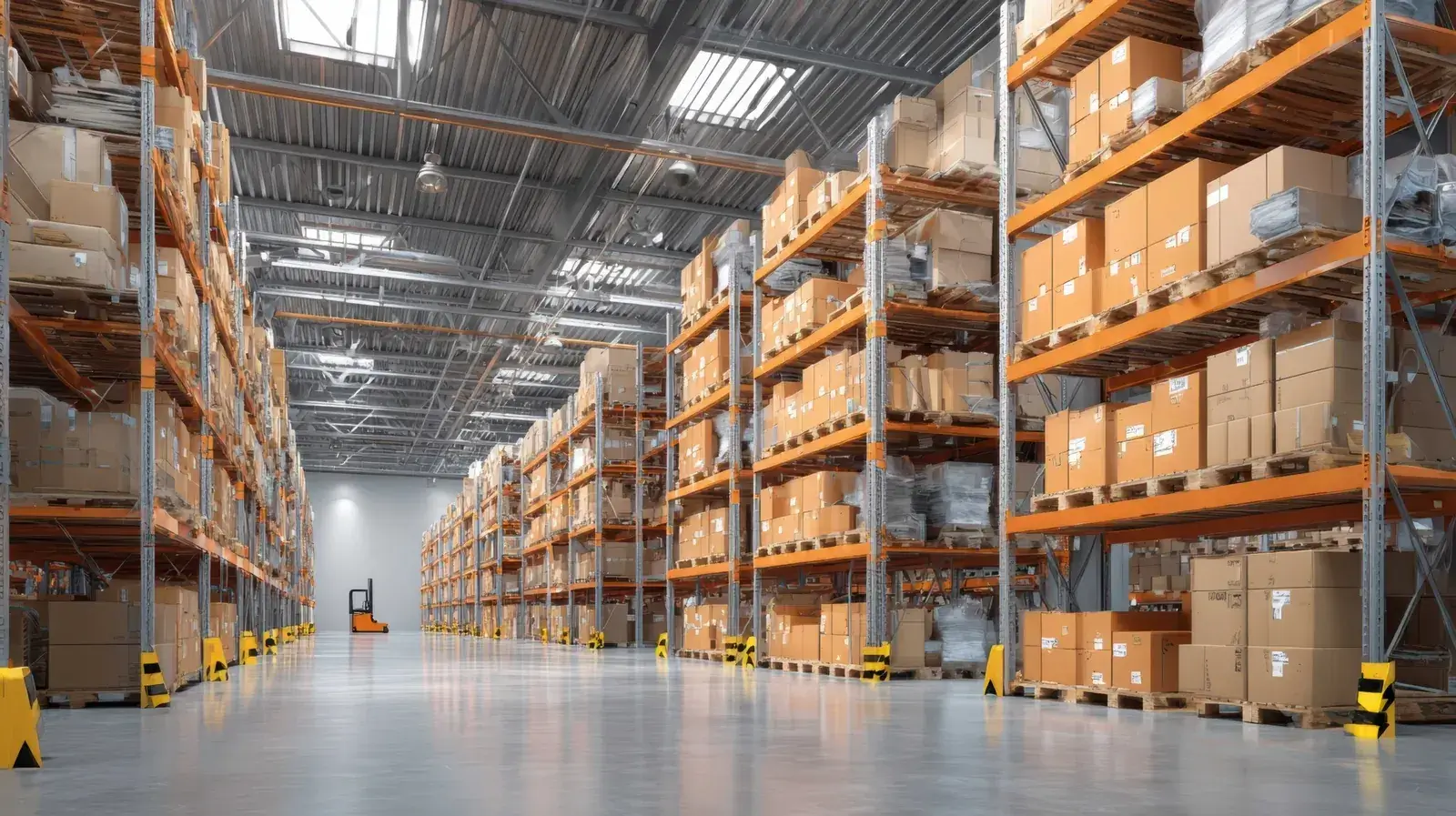
Packaging, components, spare parts and semi-finished goods need space near the factory or the delivery route. Small to medium volumes, under 23 m³, still suit a self-storage unit; from about 16 pallets 1.2 m high (over 23 m³), compare warehouse space charged by the m². Heavy materials that can stand sun and rain, such as steel, bricks or plastic pipes, usually suit a container or an outdoor yard better than an enclosed unit.
Documents, Records and Legal Archives
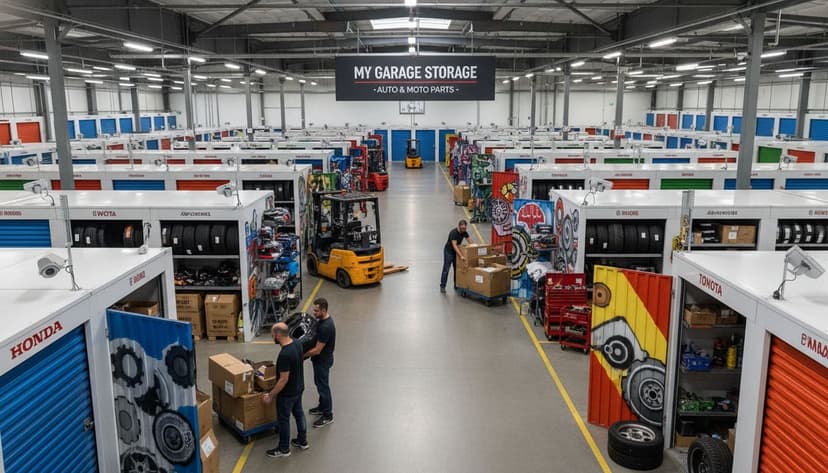
Accounting records, contracts and HR files need a dry place with controlled access, organised by retention period so they can be destroyed on time; hospitals, construction and design firms, and law, accounting and audit firms are the groups that often have to keep records for a long time. MyStorage’s document storage service has four parts:
- Archive cartons: new cartons with labels for easy organising
- Door-to-door transport: MyStorage collects your records when you ask and takes them to the storage facility
- Security and conditions: measures against theft and fire, and 24/7 air-conditioning
- Document destruction: safe disposal of important or sensitive paperwork on request
You can keep records in shared storage or in a self-storage unit (24/7 access); before sizing it, learn how long accounting records must be kept.
Equipment, Furniture and Office Assets
Spare computers, desks, filing cabinets and display equipment often need to be kept for an expansion or an office move, so renting by the month makes sense. Valuable power tools and measuring instruments are better kept in a lockable unit away from heat and humidity.
High-Value and Specialised Goods
Cosmetics, supplements, electronics, leather goods and wine are affected by temperature and humidity, so choose an air-conditioned unit. An air-conditioned unit costs about 30% to 40% more than a standard self-storage unit of the same size. Goods that need their own temperature range, such as fresh food, pharmaceuticals or flowers, belong in cold and climate-controlled storage, because an air-conditioned unit only holds about 20–25°C.
Warehousing Solutions For Business, Optimised By Industry
Each industry has an ideal setup: online shops need a nearby unit with flexible access, mechanical and construction firms need room for heavy materials, offices and accountants need document storage, and cosmetics and supplements need air-conditioned units. The table summarises the suggested setup for eight common industries.
| Industry | Typical goods | Suitable solution | Suggested size |
|---|---|---|---|
| E-commerce and retail | Cartons, seasonal stock, returns | Self-storage; shared racks for slow-moving stock | 3 to 10 m³ |
| Cosmetics and supplements | Goods sensitive to temperature and humidity | Air-conditioned self-storage | Depends on volume |
| Manufacturing and mechanical work | Packaging, components, spare parts | Self-storage; warehouse space beyond about 23 m³ | Depends on volume |
| Construction and M&E | Materials, tools, site records | Container or yard for heavy materials; a small lockable unit for tools and records | 1 to 3 m³ for small tools |
| Agencies and events | Standees, backdrops, promotional items (POSM) | Self-storage rented by the month | 5 to 10 m³ |
| Accounting, law and healthcare | Records, paperwork | Document storage | Depends on the number of record boxes |
| Startups and small businesses | Samples, small stock, equipment | Self-storage with a workspace | From 1 m³ |
| Distribution and dealers | High-volume pallet goods | Warehouse space or a 3PL service | Over 23 m³ |
Scalable Storage for E-Commerce and Retail
At the 375 Võ Nguyên Giáp site (An Khánh, Thu Duc City), MyStorage has a workspace for startups and online sellers: you can sit and work there, take stock from your unit and pack orders on the spot, instead of carrying goods home and out again to the carrier. The self-storage units there are air-conditioned, with individual locks, multi-layer security, 24/7 access and a loading area.
Storage for retail and e-commerce businesses needs to scale with sales: start with a few cubic metres of samples, grow as orders increase, then move to warehouse space or a 3PL service once you pass the largest unit. The table suggests four stages, with 2027 reference prices on the flexible plan for standard storage, excluding VAT:
| Stage | Volume | Suitable solution | Reference price (per month) |
|---|---|---|---|
| Start: samples and small stock | 1 to 3 m³ | A small unit; work and pack orders in the workspace at 375 Võ Nguyên Giáp | 1 m³ unit: 873,000 – 965,000 VND (about US$34–37) |
| Growth: daily packing | 3 to 10 m³ (30 cartons take about 3 to 4 m³, 100 cartons about 10 to 12 m³) | A self-storage unit near your delivery route; slow-moving stock moved to shared racks | 5 m³ unit: 1,796,000 – 1,984,000 VND (about US$70–77) |
| Expansion: more product lines, sale season | 10 to 23 m³ | A larger unit or several units; air-conditioned units for cosmetics and supplements | 10 m³ and above: ask for a quote based on the actual size |
| Beyond scale | Over about 23 m³ (about 16 pallets 1.2 m high) | Warehouse space or a 3PL service | Quote based on size |
Renting by the month lets you move up a unit size as sales grow without a long commitment; confirm with MyStorage the terms for changing unit size mid-term before you sign. See the price for your exact size with the Check Price tool, or estimate the volume with the AI Size Estimator further down. Larger units cost less per m³, so when comparing mini storage prices by size, include the stock you expect at peak season.
Estimating the Unit You Need
Take photos of your goods and let MyStorage’s AI Size Estimator work out the volume for you. The tool is free: photograph every side of your goods and the guide on how to calculate storage size with AI turns the photos into an approximate volume in m³. The quickest method is to convert medium cartons into cubic metres, since 1 m³ holds about 8 to 10 of them, then add 20% for the aisle and for seasonal peaks.
Estimate your storage size with AI
Manufacturing, Mechanical and Construction Work
Heavy materials and equipment that tolerate the outdoors suit a container or yard, especially when a truck or crane needs to reach them; power tools, measuring instruments and site records are better kept separately in a small lockable unit. Containers are cheap and quick to set up but get hot in the dry season, self-storage units are flexible for small volumes, and warehouses suit large palletised stock; these are the three main options in storage for businesses: containers, self-storage and warehouses. Machinery and bulky materials that need no roof suit open industrial yards (Industrial Outdoor Storage), a format growing fast around industrial parks.
Offices, Accountants and Professional Services
Client files, records and contracts belong in document storage with controlled access; spare office equipment can be stored by the month during a relocation. Businesses that want storage, transport and records management under one contract can use MyStorage’s B2B storage solutions for businesses.
Startups and Small Businesses
Startups often begin with a few cubic metres of samples and small stock, then grow as sales rise; renting by the month lets them flex without a long commitment. Startups and small businesses often start with a 2–5 m³ unit and grow from there; this approach to storage for small businesses and startups keeps fixed costs low.
Flexible Storage Options for Business Owners: Monthly Rental, Resizing and Scaling When Needed
Flexible storage for business owners means storage you rent by the month, resize as stock changes and leave without a long contract. At MyStorage, a business picks a unit from 1 m³ (holds about 8 to 10 medium cartons) to 23 m³, standard or air-conditioned, then scales up or down with the season instead of committing to a large warehouse.
A business’s storage needs fall into four groups: short-term (weeks to months), operating (goods in circulation), long-term (assets and records) and specialised (needing particular conditions). Identifying the group first helps you choose the right rental type and contract length.
| Group | Examples | Typical rental period | Suitable type |
|---|---|---|---|
| Short-term | Seasonal goods, campaign stock, goods waiting for delivery | A few weeks to a few months | Self-storage on a flexible monthly plan |
| Operating | Stock on sale, samples, frequently used supplies | Continuous, frequent access | Self-storage near your delivery route |
| Long-term | Records, spare equipment, rarely used assets | 12 months or more | 12-month plan (15% cheaper than the flexible plan); shared racks |
| Specialised | Temperature- or humidity-sensitive and high-value goods | Depends on the goods | Air-conditioned unit |
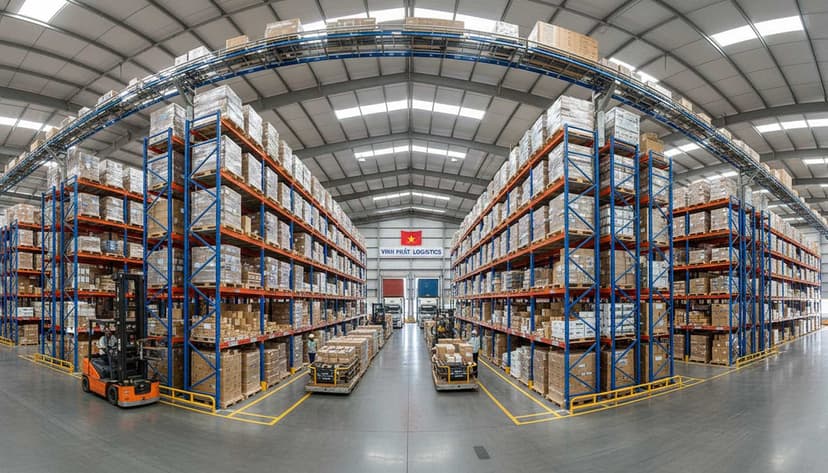
Needs change over time: a unit first used for seasonal stock can become an operating unit as sales grow. Rental storage is classified by how it is run (self-storage, shared racking, warehouse) and by temperature; understanding what a rental warehouse is and how it is classified helps you choose the right type from the start.
Flexible Warehousing Solutions for Businesses at MyStorage
Each option below answers a common kind of change that small and medium businesses face: Three options cover most cases: monthly rental with no long lock-in, changing unit size as volumes move, and taking an adjoining unit in peak season. In each case you pay for the volume you are actually using rather than signing for a full year.
- Monthly or 12-month plan: The flexible monthly plan suits you while the storage period is unclear; the 12-month plan is 15% cheaper once demand is steady.
- Resize your unit: Start small, move to a larger unit for peak season, or downsize once stock has sold, without looking for a new warehouse.
- Shared shelving or a private unit: Small quantities can go on shared shelving at a lower cost; larger stock, or stock you want to arrange yourself, belongs in a private locked unit.
- Standard or air-conditioned: Documents, cosmetics, electronics and leather goods belong in an air-conditioned unit; materials, packaging and furniture are fine in a standard unit.
- 24/7 access: Self-storage tenants can reach their unit at any time to collect stock, including outside staff working hours.
- Workspace at 375 Vo Nguyen Giap: Startups and online sellers can work and pack orders on site, right next to their storage unit.
- Delivery support: MyStorage can move goods into storage within Ho Chi Minh City, charged separately by distance and volume.
Types of Business Storage and MyStorage’s Solutions
Businesses usually choose among five options: self-storage, shared racks, air-conditioned units, document storage, and warehouse space or a 3PL service. MyStorage rents the first four as indoor units from 1 to 23 m³; warehouse space and fulfillment are handled by specialist providers.
Commercial storage is the general term for storage that serves a business, as opposed to personal storage. In practice there are three levels: self-storage units for stock under about 23 m³, a whole rented warehouse that the business runs itself, and 3PL services when receiving, dispatch and packing are handed to a third party.
Common Types of Business Storage and Warehousing Compared
Common storage types differ in how they work and who they suit, as the table below shows. The table sets four options side by side, a self-storage unit, shared racking, warehouse space and a 3PL service, against four criteria: the scale each suits, how the fee is calculated, access conditions, and how much of the operation you run yourself.
| Type | How it works | Best for | Note |
|---|---|---|---|
| Self-storage | A private lockable unit; the business accesses and organises it | Goods you take out often | Limited unit size (up to 23 m³ at MyStorage) |
| Shared racks | The operator receives and stores goods for you by package, rack or m³ | Goods you rarely need | No private unit |
| Air-conditioned unit | As self-storage with temperature control | Goods sensitive to temperature and humidity | About 30% to 40% higher price |
| Document storage | Stored by volume of records, with controlled access | Accounting records, contracts, HR files | Paperwork only |
| Warehouse space, 3PL, fulfillment | Rented by the m², or receiving, storage, picking, packing and delivery outsourced | High pallet volumes, daily dispatch | Handled by specialist providers |
Fulfillment means outsourcing receiving, storage, packing and handover to the carrier, a service usually provided by 3PL (third-party logistics) companies. Besides business storage, MyStorage also offers personal storage, smart lockers and air-conditioned units, the full range of storage unit rentals in Ho Chi Minh City.
MyStorage Self-Storage Units for Businesses
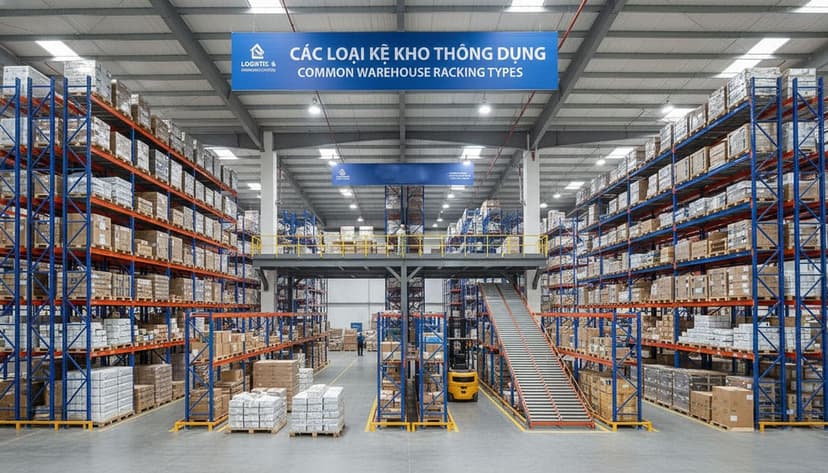
MyStorage’s self-storage units range from 1 to 23 m³, each with its own lock and multi-layer security; the storage unit size guide from 1 to 23 m³ shows how many boxes each size holds. The 375 Võ Nguyên Giáp site (An Khánh, Thu Duc City) has air-conditioning, 24/7 access and a loading area; other points include 90 Song Hành (An Phú, Thu Duc City) and smart lockers inside Ministop, 69 Trần Trọng Cung (District 7); opening hours and directions for each MyStorage storage location are listed so businesses can pick the site closest to their delivery routes. MyStorage supports transport, loading and unloading, import and export handling and supplies cartons on request; these are charged separately from the storage rent.
Business Storage Reference Prices for 2027
Choose the rental type, size and temperature to see today’s MyStorage prices and book with current offers: Pricing follows the volume of the unit and the plan: a 1 m³ unit runs 873,000 to 965,000 VND a month on the flexible plan, the 12-month plan is 15% cheaper, and an air-conditioned unit costs roughly 30% to 40% more. The larger the unit, the lower the rate per cubic metre.
The 2027 reference price for a 1 m³ unit at MyStorage is 873,000 – 965,000 VND per month (≈ US$33.91 – 37.48) for a standard unit and 1,136,000 – 1,256,000 VND (≈ US$44.13 – 48.79) for an air-conditioned unit, flexible plan, excluding VAT. VND is the billing currency and USD figures move with the exchange rate. Once stock passes about 23 m³, compare the price of self-storage units with business storage rental in Ho Chi Minh City priced per m² to find the cheaper option.
These are reference prices for 2027, billed in VND; the figures in brackets are approximate conversions, and exchange rates move. The 12-month plan is 15% cheaper than the flexible plan, air-conditioned units cost about 30% to 40% more, and shared racks cost about 8% to 23% less than self-storage of the same size, depending on size. From 10 m³ upwards the price depends on the actual size, so ask for a quotation rather than inferring it from the table. Each area has its own price level, so storage rental costs in Ho Chi Minh City 2027 by district vary a lot between the centre and the outskirts.
For a quote that fits your needs, upload photos of your goods to the free tool above, then request a free quote or call 028 7770 0117 or email hello@mystorage.vn, with the type of goods, the rental period, how often you will take goods out and any transport needs.
How to Choose Business Storage: a Six-Point Checklist
Choose by six points: location and delivery route, storage conditions, security and fire safety, access hours and handling, a flexible contract, and total cost. Visit the facility in person and ask the provider to answer in writing.
| Point | Questions to ask | Good sign |
|---|---|---|
| Location and delivery route | Is it close to where most goods leave from? Can trucks get in easily? | Near your main delivery route, with a loading area |
| Storage conditions | How are temperature, humidity and waterproofing controlled? | Air-conditioned units for sensitive goods |
| Security and fire safety | Are there cameras, individual locks, access control and fire equipment? | Individual lock per unit, multi-layer security |
| Access hours and handling | What are the opening hours, the pick-ups included and the charge beyond them? | Clear hours (24/7 access at the 375 site), charges in writing |
| Contract | What are the minimum term, renewal, early termination and mid-term size change? | Written terms, a flexible monthly plan |
| Total cost | Is VAT included? How are transport, handling and the deposit charged? | A quotation that itemises each charge |
The real cost is the rent plus extra charges; transport and handling should be quoted separately for both moving in and taking goods out. Handling, transport and insurance are often charged separately, so ask about all storage costs and extra charges before you sign.
Extra Criteria for Storing Records and Documents
For businesses storing accounting records, contracts and personnel files, check these points as well as the six criteria above: Paper records need three things ordinary stock does not: steady humidity so pages do not yellow or go mouldy, a unit with its own lock because the files are confidential, and a clear box inventory so anything can be found during an audit or a tax review.
- Humidity and temperature: Paper mould and yellowing are common, so choose an air-conditioned unit that keeps humidity below about 60%.
- Security and access rights: Only authorised people should be able to open the unit; look for cameras, access codes and a lock the business holds.
- Retrieval: Number the boxes and index them by year and document type so you can find a file within minutes when the tax office or an auditor asks.
- Legal retention periods: Arrange files by how long they must legally be kept, so you know which boxes are due for destruction and avoid keeping them too long or destroying them too early.
- Saving office space: Moving rarely used files to storage frees up the office and usually costs less than renting more office space.
When to Move From Self-Storage to Warehouse Space or a 3PL
When your goods exceed about 23 m³ (about 16 pallets 1.2 m high), you need trucks at the door often, or you need pallet racking and dispatch processes, compare warehouse space charged by the m² and 3PL providers. Before you decide, try estimating the volume with the AI Size Estimator to see whether your goods still fit within a self-storage unit.
Frequently Asked Questions About Business Storage
The questions below quickly answer what business storage holds, which type to choose, the 2027 price and how to get a quote.
What does business storage hold?
Business storage holds trading stock and e-commerce goods, raw materials and production goods, records and documents, equipment and office assets, and high-value or specialised goods such as cosmetics, electronics and supplements.
What is business storage, or commercial storage?
It is a service that lets a business rent space for goods, records and equipment by the unit, rack or floor area. At MyStorage in Ho Chi Minh City, that means indoor units from 1 to 23 m³, shared racks, air-conditioned units and document storage.
Should a small business choose self-storage or shared racks?
Self-storage suits businesses that take stock out often and want to organise it themselves. Shared racks cost less and suit small volumes that you rarely need to access.
How much does business storage cost in Ho Chi Minh City in 2027?
At MyStorage, a 1 m³ standard unit has a reference price of 873,000 – 965,000 VND (about US$34–37) per month and an air-conditioned unit 1,136,000 – 1,256,000 VND (about US$44–49) per month on the flexible plan, excluding VAT. The 12-month plan is 15% cheaper. Use the Check Price tool for the exact price for your size.
Is the 12-month plan worth it?
The 12-month plan is 15% cheaper, equal to 12 × 0.85 = 10.2 months of the flexible price. If you are sure to use the unit for more than about 10 months a year it wins; confirm the commitment terms before signing.
Which goods should go into an air-conditioned unit?
Cosmetics, supplements, electronics, leather goods, important documents and anything that spoils in heat and humidity. Ordinary items such as packaging or POSM can go into a standard unit to save money.
What should I know about document storage for a business?
It needs a dry place with controlled access, organised by retention period so records can be destroyed on time. Learn how long accounting records must be kept before you size your storage.
Can businesses access their storage outside office hours?
Yes. Self-storage at 375 Võ Nguyên Giáp allows tenants 24/7 access; MyStorage staff are on site during office hours.
Can I rent storage and work at the same site?
The 375 Võ Nguyên Giáp site has a workspace for startups and online sellers: you can sit and work there, take stock from your unit and pack orders on the spot.
Are transport and handling included in the rent?
Do not assume so. MyStorage supports transport and handling on a separate quotation; request one based on the address, the volume, the vehicle and the access conditions, for both moving in and taking goods out.
When should I move to warehouse space or a 3PL?
When your goods exceed about 23 m³ (about 16 pallets 1.2 m high), you need trucks at the door often, or you need pallet racking and dispatch processes. Then compare warehouse space charged by the m² or a 3PL service.
How is a fulfillment warehouse different from self-storage?
With self-storage you rent a unit and manage the goods yourself. With fulfillment you outsource receiving, storage, picking, packing and handover to the carrier to a specialist provider.
How do I estimate the unit my business needs?
Estimate in cubic metres: 1 m³ holds about 8 to 10 medium cartons, and a pallet 1.2 m high takes about 1.44 m³. You can photograph your goods and let the AI Size Estimator estimate it, then contact MyStorage for a quote.
What are scalable storage solutions for retail and e-commerce businesses?
Start with a self-storage unit of a few cubic metres on a monthly plan, move up a size as sales grow, put slow-moving stock on shared racks, and move to warehouse space or a 3PL once your goods exceed about 23 m³. The 375 Võ Nguyên Giáp site has a workspace where you can pack orders on the spot.
What does MyStorage’s document storage service include?
It includes archive cartons with labels, door-to-door transport when you ask, a facility with measures against theft and fire and 24/7 air-conditioning, and document destruction on request. You can keep records in shared storage or in a self-storage unit.
What flexible storage options do business owners have?
At MyStorage, business owners can rent by the month or on a 12-month plan, resize a unit from 1 to 23 m³, choose shared shelving or a private unit, standard or air-conditioned storage, get 24/7 access, and work and pack orders at the 375 Vo Nguyen Giap facility.
Related articles
Article
Moving To HCMC: Where Your Shipment Goes Before You Have An Apartment 2027
Moving to Ho Chi Minh City before the lease is signed? This guide follows an international shipment from Cat Lai Port and Tan Son Nhat through customs clearance into storage-in-transit…
Read article

Article
Do Packing Cubes Really Make A Suitcase Tidier? How To Use Them And Store Luggage 2027
Packing cubes keep a suitcase tidy and easy to search, but only mechanical compression cubes actually reduce the volume of clothes; this guide compares three types of bag, how to pack them…
Read article
Article
Storing Children’s Toys, Strollers And Everyday Items: A Tidy Apartment 2027
To keep an apartment with a small child tidy, parents should rotate toys, hang the stroller upright behind a door and move bulky items from each stage of the baby’s life into family storage…
Read article
